





Desk Stand Analog 30-0-30 (20uA/Div) Moving Coil Galvanometer – Black Colour
Product Description & Key Specifications
What it is
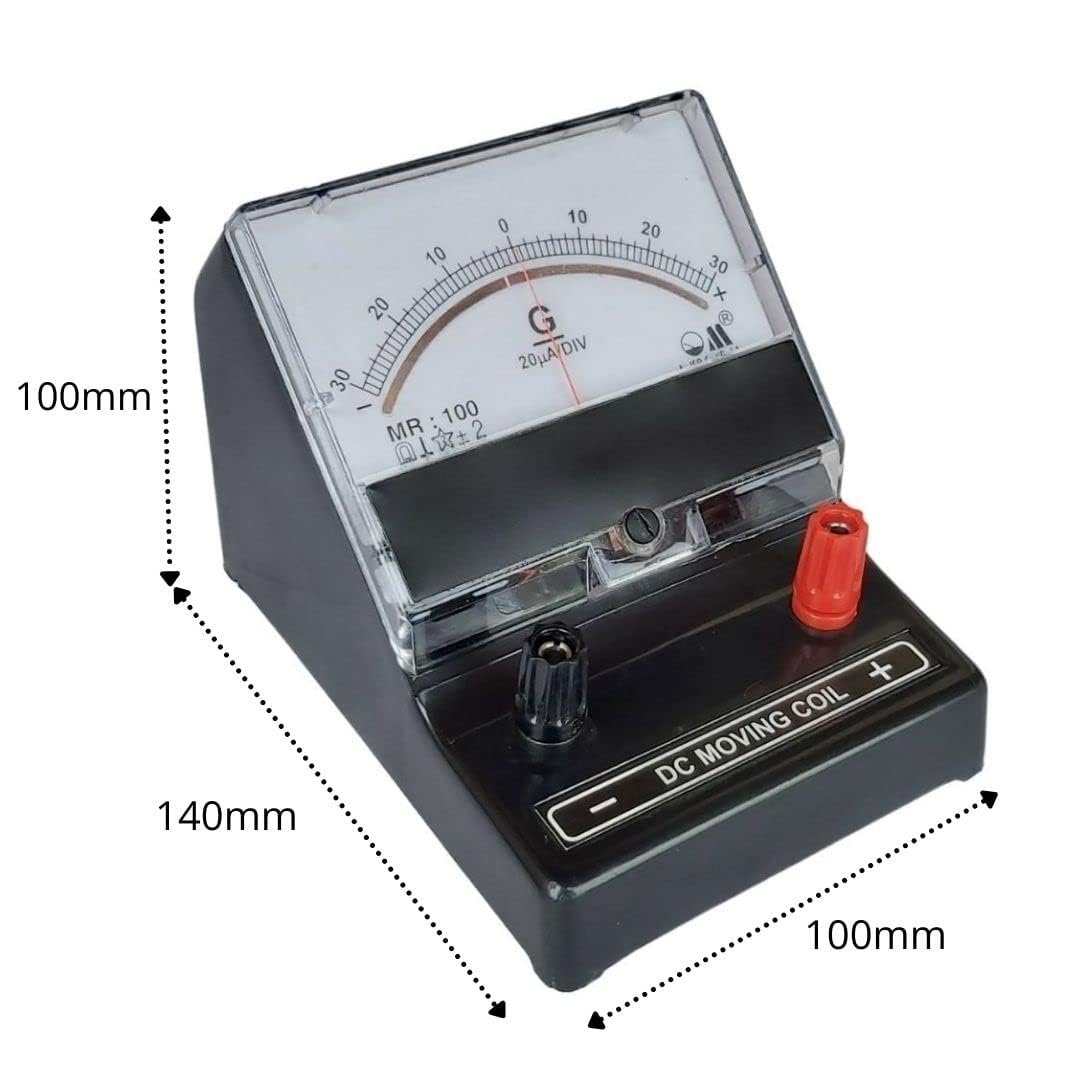
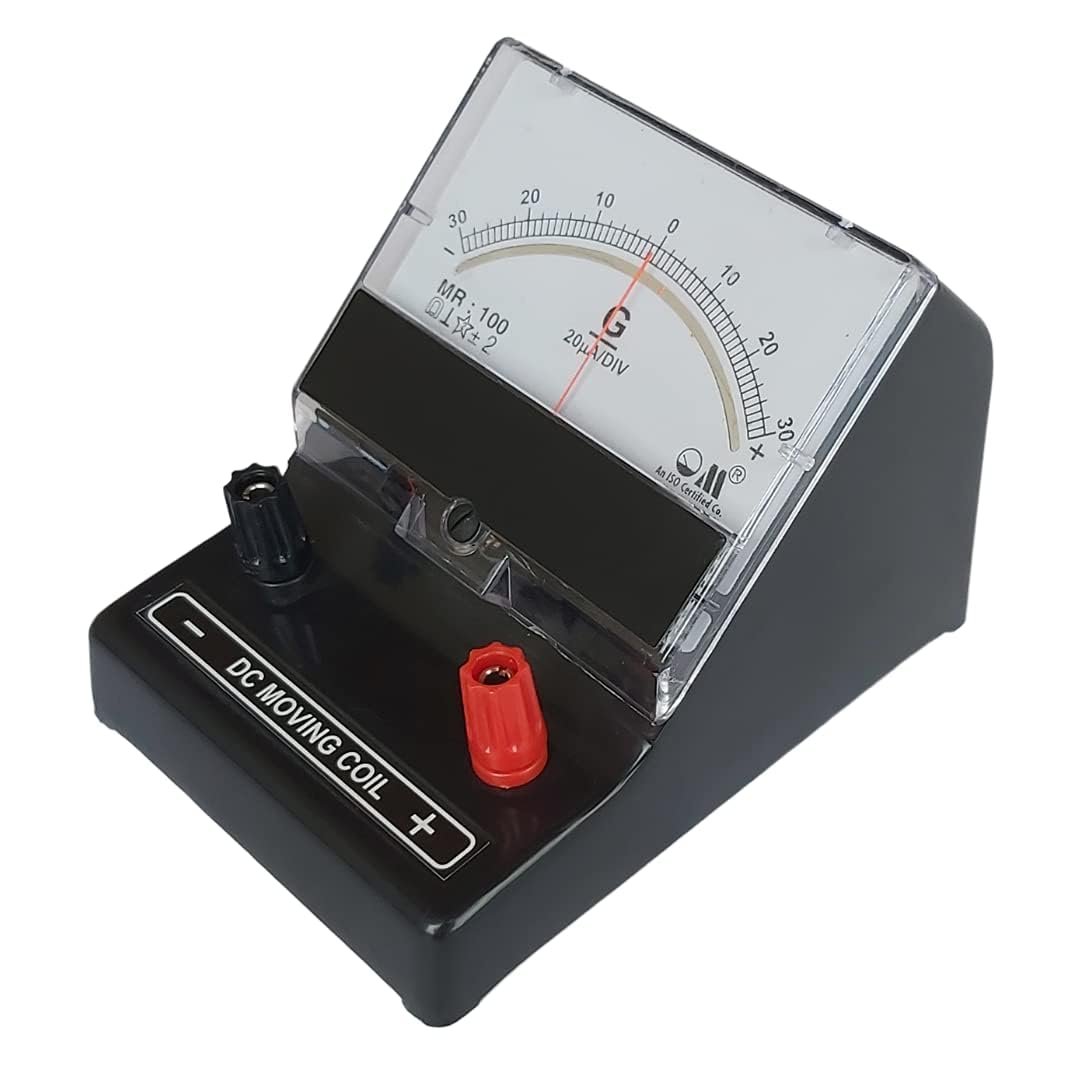
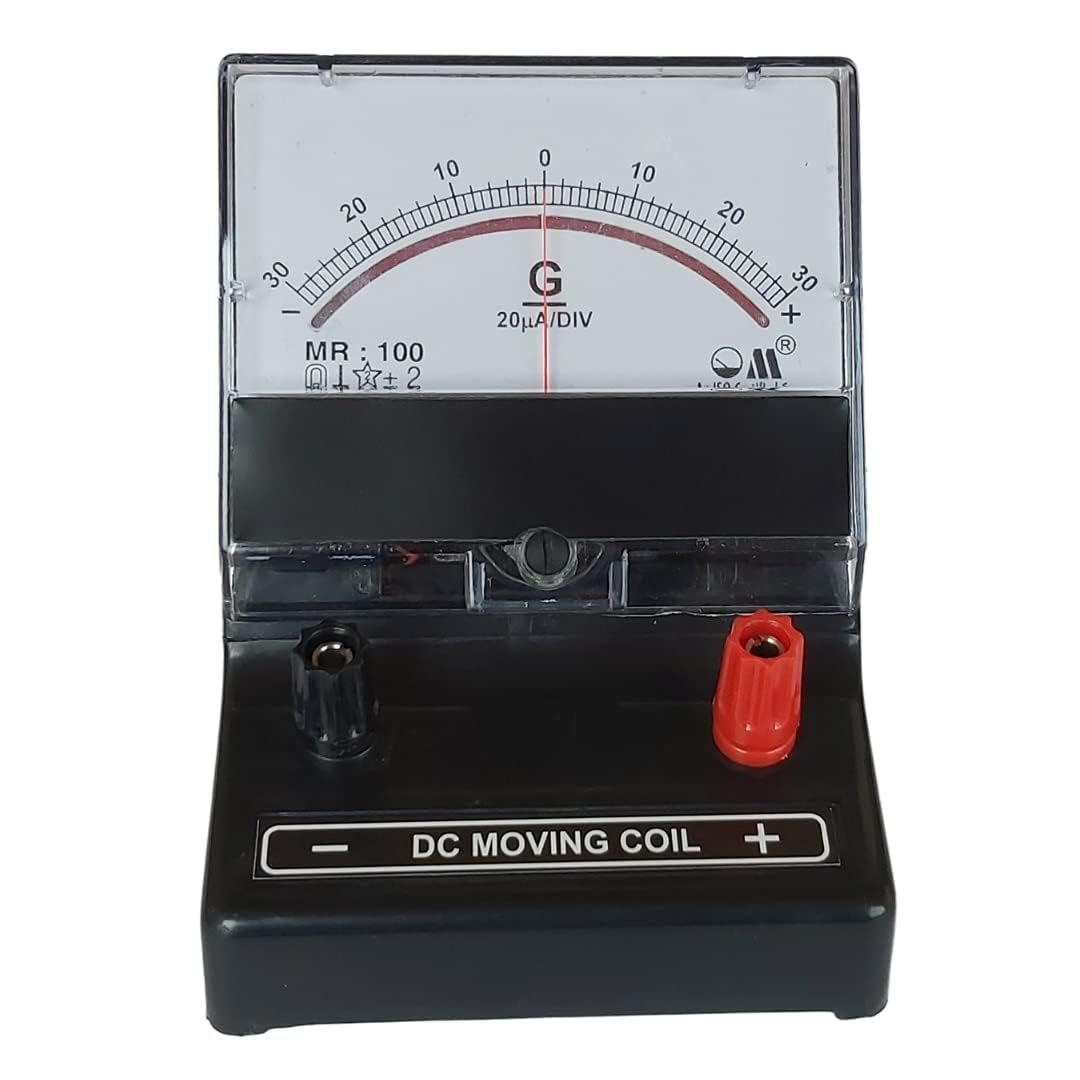
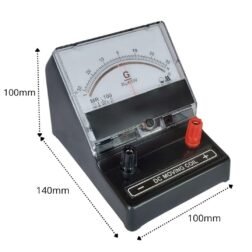
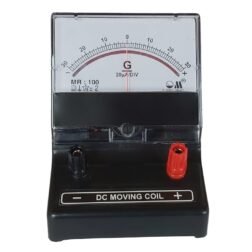
This is an analog moving-coil galvanometer mounted on a desk stand, designed for laboratory use. In this case:
-
Scale: 30-0-30 (means the pointer can deflect 30 divisions in the positive direction, 0 at centre, 30 in the negative)
-
Sensitivity: 20 µA per division (i.e., every division on the scale corresponds to 20 microamperes of current)
-
Colour / finish: Black (in the listing: “Black … desk stand analog 30-0-30 (20µA/Div) moving coil galvanometer (Black)”)
-
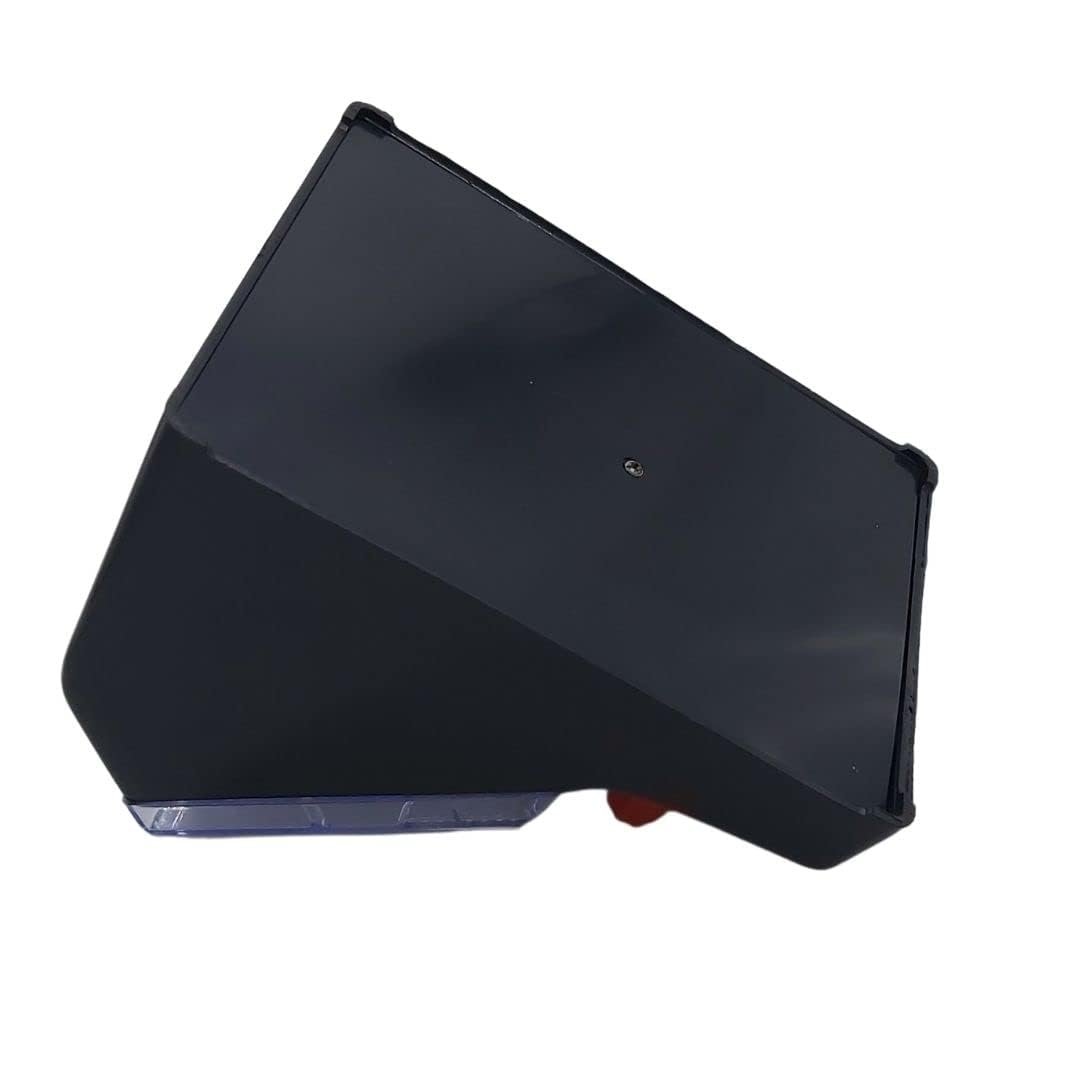
Mounting: Desk stand type (i.e., has its own base/stand so you can place it on a bench)
-
Usage: For measuring small DC currents in laboratory experiments (physics labs, engineering labs) using a moving-coil type galvanometer.
Additional Specification Highlights (from available data)
From the MR-100 variant:
-
Case: ABS plastic (in some versions)
-
Accuracy: ±2% of full-scale deflection (F.S.D) in some models.
-
Dimensions: Example listed for MR-100: about 100mm × 100mm × 140mm.
-
Scale length: In one listing ~80 mm approximate for the 30-0-30 (20µA/div) model.
-
Weight: Example ~300 g approx for a particular version.
-
Mounting style: Front terminal, stand-type base etc.
What “30-0-30 (20 µA/Div)” means
-
The “30-0-30” indicates the full-scale deflection is ±30 divisions from the centre zero.
-
With “20 µA/Div”, one division equals 20 microamperes. So full deflection (30 divisions) corresponds to 30 × 20 µA = 600 µA (0.6 mA) in that direction, and similarly in the negative direction.
-
The moving-coil galvanometer works by the coil in a magnetic field being deflected proportionally to current
Construction / Features
-
Moving coil type: a fine coil wound on a frame, suspended in a magnetic field, with a pointer that deflects when current passes. The deflection is proportional to current (for small currents).
-
Desk stand: Means the instrument is mounted such that it can stand on a bench, making it convenient for experiments.
-
Black-colour finish: This particular listing emphasises “Black” in the description (e.g., “…Galvanometer (Black)”).
-
Portable / compact for lab use: Some listings mention “portable and compact” design.
✅ Applications & Use-Cases
-
Ideal for measurement of small DC currents in physics/engineering laboratory experiments (for example: ● Wheatstone bridges, ● null/detection experiments, ● demonstration of current flow).
-
Educational labs: Suitable for school/college practicals where students need to see current deflection. Example listing: “School & Colleges Lab experiment – galvanometer – for science lab.”Research or prototyping where measuring micro‐ampere level currents is required.
-
Demonstrations of principles of electromagnetic measurement devices: useful since the scale is symmetric (30-0-30) and shows positive/negative deflection, which helps illustrate direction of current.
⚠️ Things to Check / Consider Before Buying or Using
-
Range & sensitivity: Ensure the 20 µA/div suits your experiment. If your current flow is much higher or much lower, either you’ll not use much of the scale or you risk saturation.
-
Accuracy: Some models list ±2% F.S.D (full scale deflection) as accuracy. If you need higher precision, check spec sheet. (For example: listing mentioned “Accuracy: ±2 F.S.D.”)
-
Scale readability: Since it’s analog, check that the scale divisions are clear, pointer is sharp, and parallax error is minimised (some units may have anti-parallax mirror). One listing even mentions “anti-parallax mirror” for pointer reading.
-
Mounting stability: Desk stand should be stable so that vibrations or bench movement don’t affect readings.
-
Coil resistance & circuit compatibility: Galvanometers typically have low coil resistance; ensure your circuit can safely connect to it without loading or altering measurement significantly.
-
Direction of deflection: The 30-0-30 gives you both positive and negative deflection; your experiment should permit centred zero, or you might need modifications.
-
Durability: Since moving parts are involved (coil, springs, bearings), check build quality. Some models use ABS plastic case; while adequate, might be less robust than metal. Extract: “Case: ABS Plastic …”
-
Calibration / zeroing: Before use, ensure pointer is truly at zero when no current passes; if not, you may need to adjust or compensate.
Be the first to review “Desk Stand Analog 30-0-30 (20uA/Div) Moving Coil Galvanometer – Black Colour”
Related products


Health & Personal care
Modular ABS Infantometer Scale for Baby Height Measuring Scale for Infant Baby

Health & Personal care



Glucometer
BeatO CURV Smartphone Connected Glucometer with 25 Strips & 25 Lancets (Type-C USB)Multicolor

Reviews
There are no reviews yet.